
Melodies Behind the Reels: Tracing How Music Design Influences Patterns in Chance-Based Gaming
Soundtracks in chance-based gaming have evolved from simple chimes to layered compositions that shape how players interact with reels and bonuses over extended sessions, and researchers continue to map these connections through controlled observation and large-scale data analysis. Music tempo often aligns with spin rates in digital slot titles, which in turn correlates with changes in wager frequency according to tracking metrics compiled across multiple platforms.
Early Development of Audio Layers in Gaming Machines
Mechanical slots relied on basic bell rings and lever clicks that punctuated each outcome, yet the shift to electronic systems in the late twentieth century introduced programmable tracks capable of building tension during near-miss sequences and releasing it after successful combinations. Developers began testing different BPM ranges in the 2000s, noting that selections around 120 beats per minute encouraged steadier play patterns while faster tempos pushed quicker decision cycles in some player cohorts.
Psychological Mechanisms at Work
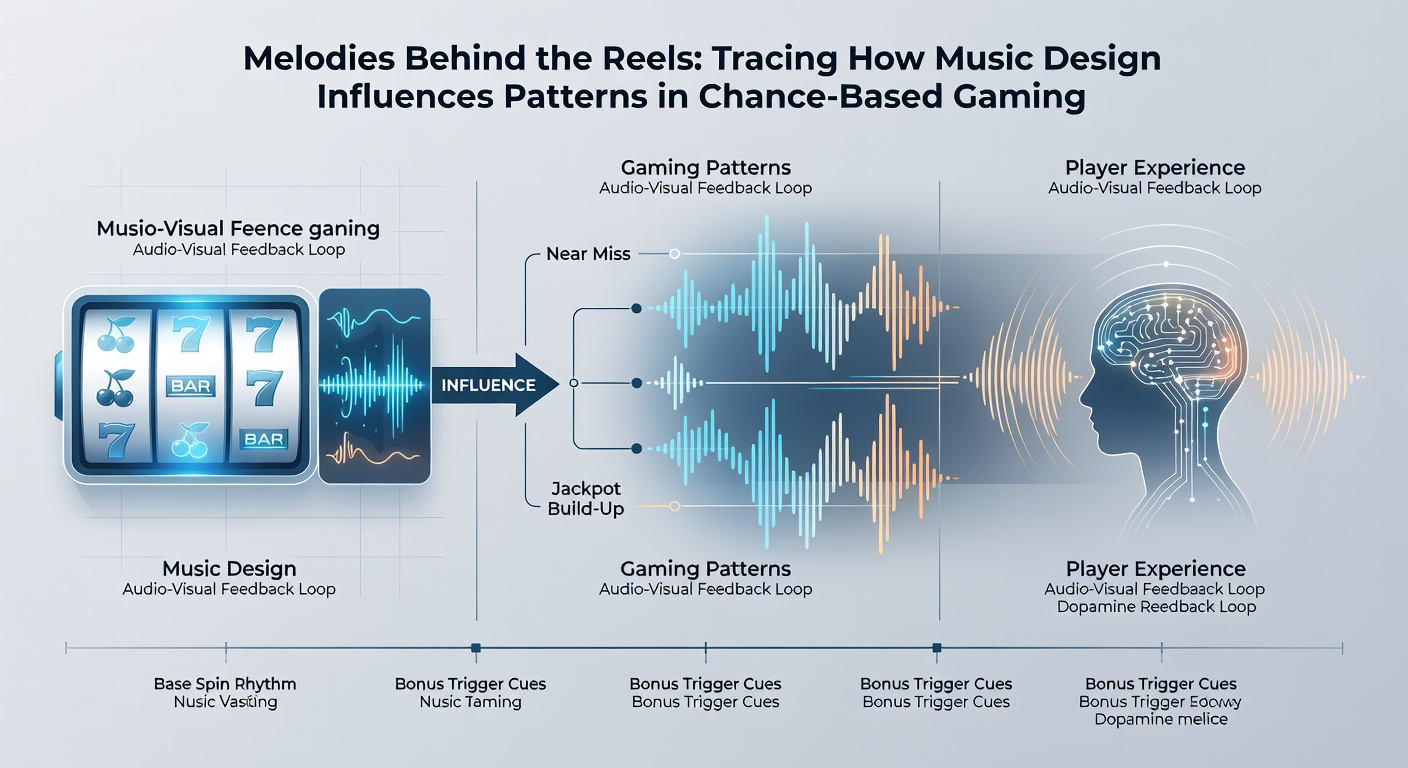
Studies in cognitive psychology demonstrate that background melodies influence dopamine responses during random reward events, and this effect appears stronger when harmonic progressions mirror rising bet multipliers or expanding reel features. Minor key motifs tend to sustain attention across losing streaks by creating subtle expectancy, whereas major key swells frequently accompany feature triggers and reinforce continued engagement once wins register. Observers note that these auditory cues integrate with visual feedback loops, creating multisensory reinforcement that extends average session duration without altering the underlying probability structures.
Data collected from North American casino floors shows measurable differences in spin intervals when music volume sits at moderate levels versus muted settings, and similar patterns emerge in online environments where players can adjust audio independently. Those who've examined aggregated telemetry from thousands of accounts report that adaptive soundtracks, which shift intensity based on current balance or streak length, produce distinct clustering in bet-size adjustments compared with static loops.
Current Applications Across Digital Platforms
Modern slot engines incorporate dynamic mixing that raises or lowers instrumentation layers as bonus meters fill, and this technique appears in titles released throughout 2025 with further refinements scheduled for deployment in May 2026. Game studios now commission original scores rather than licensing stock tracks, allowing precise synchronization between musical phrases and reel-stop animations that heighten anticipation during high-volatility segments.
Regulatory frameworks in several jurisdictions require clear separation between entertainment audio and any mechanical outcome indicators, which has prompted designers to embed subtle frequency cues rather than overt alerts. A report issued by the Responsible Gambling Council in Canada outlines how these layered approaches affect player pacing across different demographic groups, while parallel work from the Australian Gambling Research Centre examines cross-cultural responses to the same musical structures.
Data Patterns and Observed Trends
Analytics platforms record that sessions featuring synchronized music display tighter distributions around optimal spin speeds, and this consistency holds across both mobile and desktop interfaces. Researchers tracking European markets have identified correlations between specific key changes and the timing of voluntary cash-outs, suggesting that resolution in the soundtrack can prompt reevaluation points even when reel results remain random. These observations draw from anonymized logs rather than self-reported experience, which reduces recall bias in the resulting datasets.
Industry reports indicate continued investment in procedural music systems that generate variations on the fly, ensuring no two playthroughs share identical audio sequences while maintaining thematic coherence. Such systems allow developers to test micro-adjustments in real time, measuring subsequent shifts in engagement metrics without requiring full game rebuilds.
Looking Ahead to 2026 Standards
Upcoming certification requirements scheduled for May 2026 emphasize transparency in how audio elements interact with game mathematics, and testing laboratories have begun developing protocols to quantify these interactions before titles reach public release. Developers preparing for these standards already conduct internal trials that isolate melody variables while holding reel configurations constant, producing clearer maps of influence on play tempo and stake progression. The resulting documentation supports both regulatory compliance and iterative design improvements across global markets.
Conclusion
Audio design in chance-based gaming continues to integrate more closely with core mechanics, supported by accumulating evidence from behavioral tracking and psychological research. Patterns observed today inform refinements that will shape player interactions well into the next regulatory cycle, while maintaining strict separation between entertainment elements and the independent random processes that govern outcomes.